The Budget Trick That Funds Our Bigger Adventures
July 15, 2026 · 2,541 days to go
Not every trip is supposed to be the big one. Some of ours are there specifically to make the big ones possible.
We think about travel spending the way you'd think about a budget across an entire year, not a single trip in isolation. A few genuinely expensive weeks somewhere, a riverboat cruise through Europe, an African safari, get balanced out by cheaper stretches elsewhere. Averaged across everything, the whole year still pays for itself, in full, before we go. That's the actual mechanics behind "pay before you go," not just a slogan, a real math problem we solve on purpose.
The Caribbean and Alaska are where that balancing happens, for us.
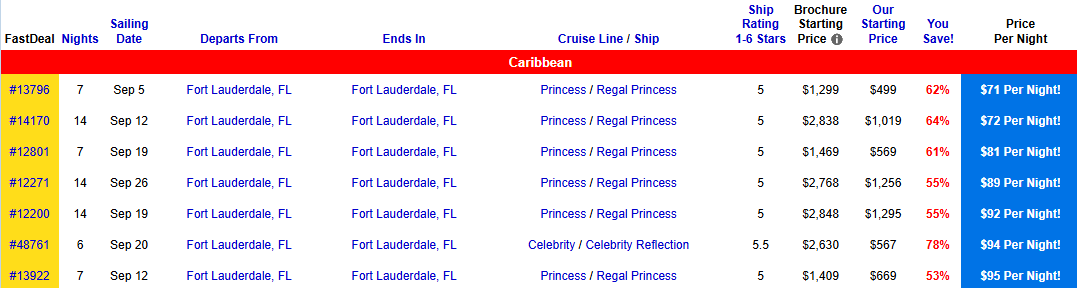
In the off-season, a Caribbean cruise can run remarkably cheap, current drop-and-go listings show a range from $59 to $85 and up per night, discounts of 50% to 93% off brochure price, across MSC, Carnival, Royal Caribbean, and Princess, mostly departing from Florida ports. Different cruise lines offer these itineraries regularly, meaning we can string together anywhere from two to eight weeks at that price, almost entirely from US ports, which keeps logistics simple. This isn't a secret or a fluke either, cruise pricing follows well-documented seasonal patterns, with hurricane season and post-holiday months consistently offering the deepest discounts on exactly this kind of drop-and-go booking. I'll be honest, we're not going for the destination at that point. The Caribbean has a complicated, sometimes difficult history, and there isn't a lot of cultural or historical pull for us there beyond that. What it offers instead is straightforward: sun, water, and a genuinely low daily cost, which is exactly what a budget-offset stretch needs to be.
Alaska works almost the same way, just for different reasons. Four trips in, we've done the excursions, seen the glaciers, taken the tours. At this point, an Alaska cruise in the off-season functions less like a vacation and more like a cheap, all-inclusive hotel room with genuinely good food, English-speaking ports, and easy access from home. The salmon alone is worth mentioning, it shows up at nearly every meal, a small luxury that comes standard with an otherwise budget-minded stretch of travel.
Mexico belongs in this conversation too, with one real distinction I want to be upfront about. Puerto Vallarta specifically, as a land-based all-inclusive resort stay, is off the table for us now, safety on the Pacific side is a genuine concern that hasn't gotten better. But a cruise stop is a different decision entirely, since getting off the ship in port is optional every single time. If a cheap, drop-and-go Mexico itinerary shows up while we're killing time before a bigger trip, that's still a reasonable option on the table, the same logic as the Caribbean and Alaska, just with a more careful eye on which ports actually make sense to leave the ship for. We use a cruise deal ticker to actually track this, and current Mexico and Central America listings run as low as $59 to $92 per night, discounts of 55% to 93% off the brochure price, across cruise lines like MSC, Carnival, Royal Caribbean, and Princess. That's right in the same range as the Caribbean pricing above, another region where the off-season math consistently works in our favor.
This same ticker shows the strategy works even somewhere brand new to us. Round-trip Shanghai sailings on MSC currently run $118 to $153 a night, still genuinely affordable even in Asia. That points to a slightly different use of the same tool, though. Caribbean, Alaska, and Mexico are places we're using as cheap filler precisely because we've already toured them. China would be the opposite, somewhere we haven't been at all, and the affordability opens up a different option entirely: looping the same route more than once, on purpose, specifically to cover competing excursions that can't all fit into a single sailing. Do one set of excursions on the first loop, the ones you couldn't fit on the first pass on the second. When the price is low enough, doing the same route twice to get the full experience stops being wasteful and starts being practical.
Rome does the same job on land, for me. It's not a cruise, but the logic is identical: a comfortable, familiar, affordable place to land for four or five days in the middle of a longer, bigger trip, rather than another expensive stop stacked on top of everything else.
None of this is about traveling cheap for its own sake. It's about making sure the expensive weeks, the ones that actually matter to us, the safari, the riverboat cruise, the genuinely bucket-list trips, are already fully funded by the time we leave, because the inexpensive weeks did their job first. That's the whole system: nothing gets charged and hoped for later. Everything gets paid for, on purpose, before we go.
