What We've Let Go Of
July 29, 2026 · 2,527 days to go
Letting go of things sounds like a retirement chore, something you do at the very end, right before you downsize into something smaller. We started years early instead, and it wasn't really about clearing space. It was about two very different, very deliberate decisions.
The first was Jeff's car. He'd already been working from home for a while by the time he was laid off, so the truth is we didn't actually need two cars for practical reasons. We kept them anyway. It felt like we needed a his and hers, even though Jeff really only drove his on weekends or the occasional errand. His was an Acadia, his dream car, the one he'd always wanted, and having it in the driveway mattered to him even on the days it just sat there. We both felt it, honestly, the sense that having certain things said something about who we were. We know better now. But knowing better now doesn't erase how it felt for years, every commercial, every ad online, selling you the idea that stuff equals status. That's a hard current to swim against, even when you can see it happening.
Letting go of the second car wasn't really about the car. It was about asking who we are without the stuff, and whether we're okay with that, even if someone else notices we don't have it anymore. That's still a pattern we're working through, not one we've fully broken. But we do know this much: the thrill we used to get from a new car or new furniture doesn't compare to what we feel booking a trip or standing somewhere we've never been. Experience has become our drug of choice, if that's a strange way to put it, and it beats the high we used to get from buying things, every time.
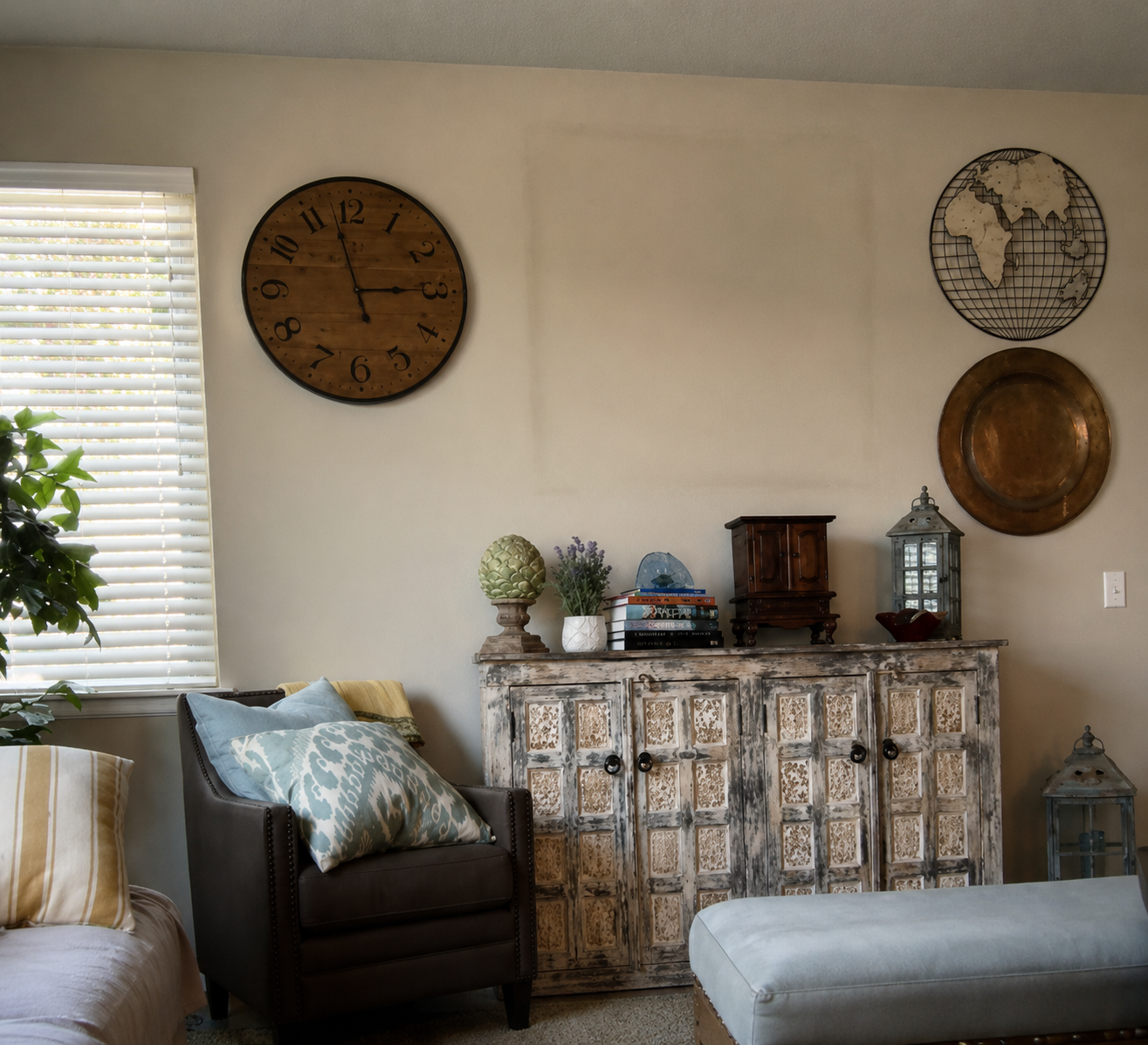
The second is the art. We have a significant amount of artwork, and we're in the middle of selling most of it right now. That one surprises people, because it's not driven by needing the space or needing the money today. It's about timing. If we sell it now and let that money grow for the next several years instead of leaving it hanging on a wall until the day we retire, it has real time to work for us, potentially doubling in value by the time we actually need it. Waiting until the finish line to sell means giving up years of growth on money that was just sitting there, decorative.

"When we bought this Michael Godard, we weren't thinking about retirement. We were celebrating something we'd worked hard for and bringing home a piece that made us smile every time we walked past it. Years later, it represents something different. Selling it doesn't erase the memory of buying it with Michael standing beside us. It simply means the artwork is helping fund the next chapter of our lives."
But the real reason underneath both of those decisions isn't financial at all.
Jeff and I have now been through two experiences of processing an aging or dying family member's home. Going through everything, sorting it, donating it, deciding what mattered and what didn't. And in the end, almost all of it ended up in the same place: a landfill. Things that meant something to someone, once, ended up meaning nothing to anyone once they were gone.
We don't want to do that to our son.
It's not about leaving him nothing. It's about not leaving him a mess. We want him to have room to grieve us when the time comes, not spend months processing a house full of things we never got around to dealing with ourselves .
That's really the test we run everything through now. Stuff is just stuff. Somebody has to deal with it eventually, whether that's us, on our own terms, now, or our son, on nobody's terms, later. We'd rather it be us.
