The Stuff We Can't Quite Let Go Of
August 1, 2026 · 2,524 days to go
Getting rid of furniture is easy. Neither of us is attached to a couch. It's everything else that's hard.
Jeff and I actually think about this differently, and we've talked about it a lot, especially while going through the house room by room. For Jeff, it comes down to what feels irreplaceable, photos, notes, yearbooks, things he can't get back once they're gone. But even he'll admit the harder truth sitting right behind that instinct: if he died tomorrow, a lifetime of his photos would mean almost nothing to anyone else. They'd probably end up in the same pile as everything else. Knowing that doesn't make it easier to let go of them. It just makes the question more honest.
For me, it's less about the object and more about the cost of keeping it. Sentimental value lives in my head now, not in something I can touch. So when I'm deciding whether to keep something, I ask what keeping it actually costs, a storage unit somewhere, a monthly bill, real money for something sitting in the dark. If what we're storing isn't worth what it costs to store it, it goes.
I don't need the object to keep the memory. A photo on my phone, on an Alexa somewhere, is usually enough to remind me what someone looked like, what a moment felt like. The real question isn't whether I loved the thing. It's whether I'm in love with the object itself, or the memory of the day we got it. Once you separate those two, most objects lose their grip pretty fast.
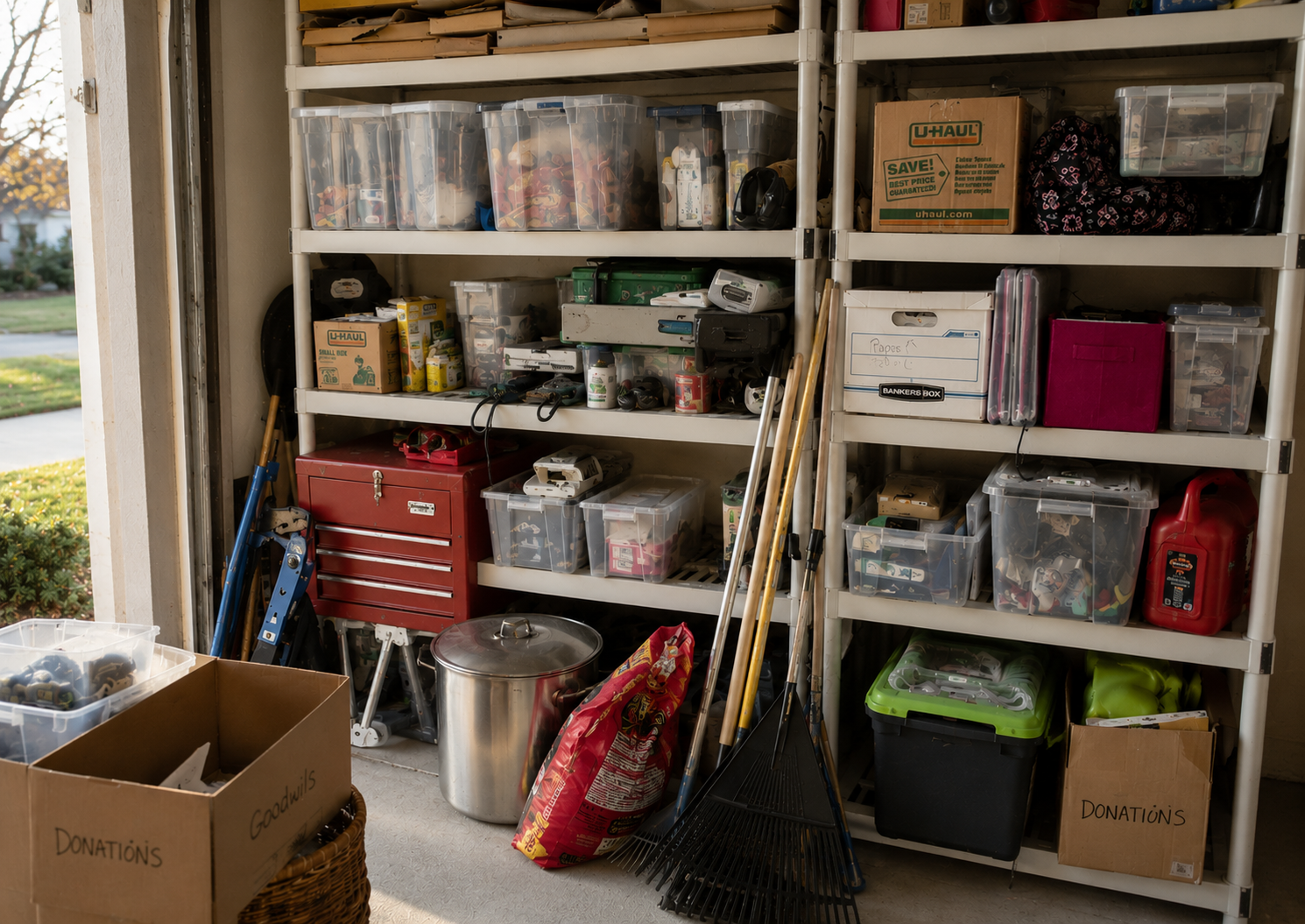
That said, it's not always that clean. There's a sewing machine in the garage, barely used, still good, that neither of us wants to take into retirement, but throwing away something perfectly functional doesn't sit right either, financially or emotionally. Jeff has guitars the same way, real money spent on them once, hard to justify just giving up.
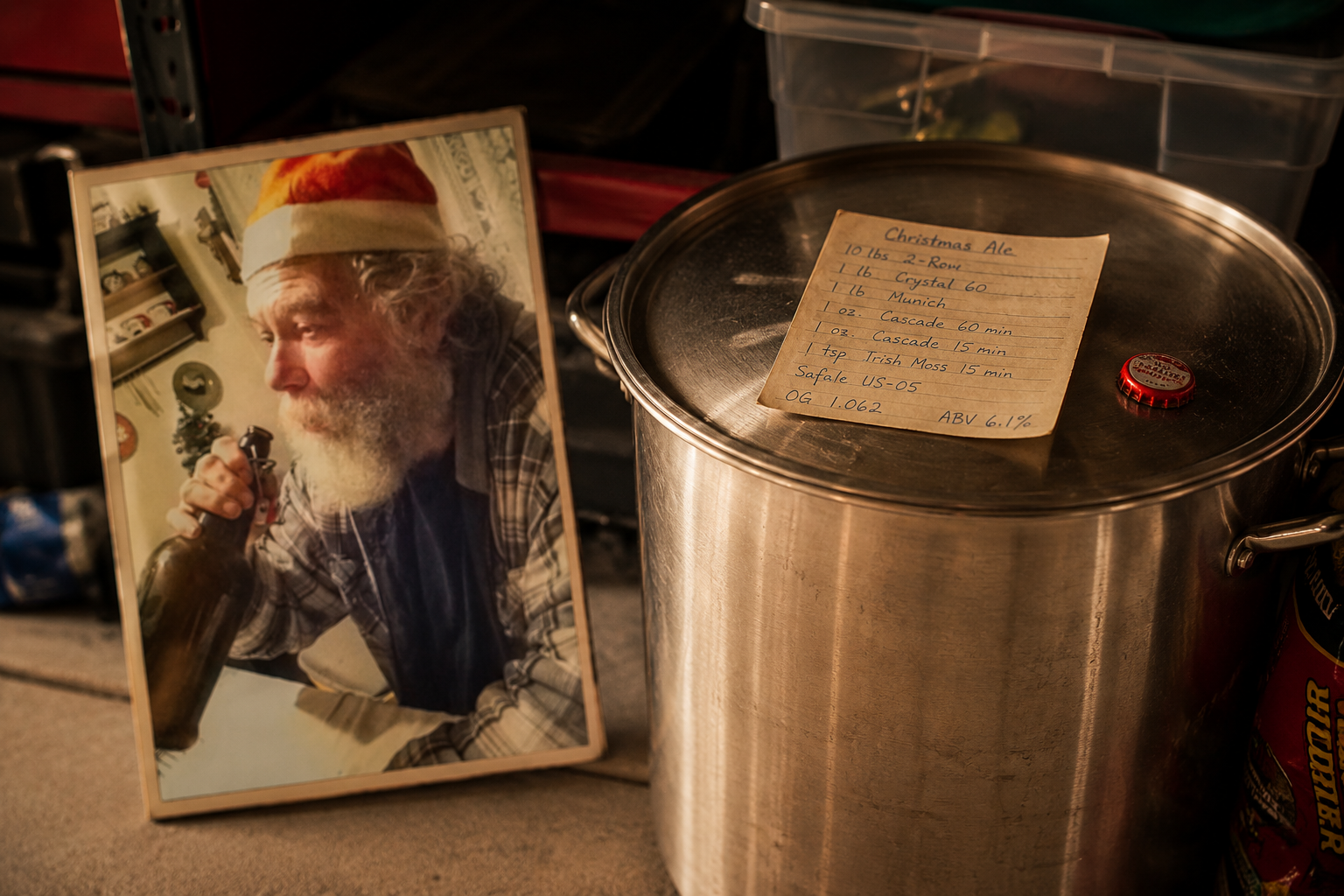
Jeff has a brewing kettle too, brand new, barely used, from a hobby that just isn't part of our life anymore. On its own, it's an easy one to let go of. But it sits in the garage next to a photo of my dad, gone now, holding one of the home brews Jeff made him, grinning, Santa hat and all, at Christmas. The pot itself was never really the point. The memory it made is worth infinitely more than the metal it's made of, and that's the whole lesson of this post in miniature. We can let the object go. We just don't let go of what it gave us.
The hardest example is Jeff's snowboard. Over a thousand dollars when he bought it, used maybe three times, then fifteen years on a garage shelf. When he finally tried to sell it, nobody wanted a fifteen-year-old snowboard, better and cheaper ones exist now. It ended up in the landfill. And it stung, not because the snowboard itself mattered, but because he was still holding onto what it cost the day he bought it, not what it's actually worth today. That gap between then and now is where most of this difficulty really lives.
But if I'm honest, my hardest one isn't a thing I'm ready to talk about in the past tense yet.
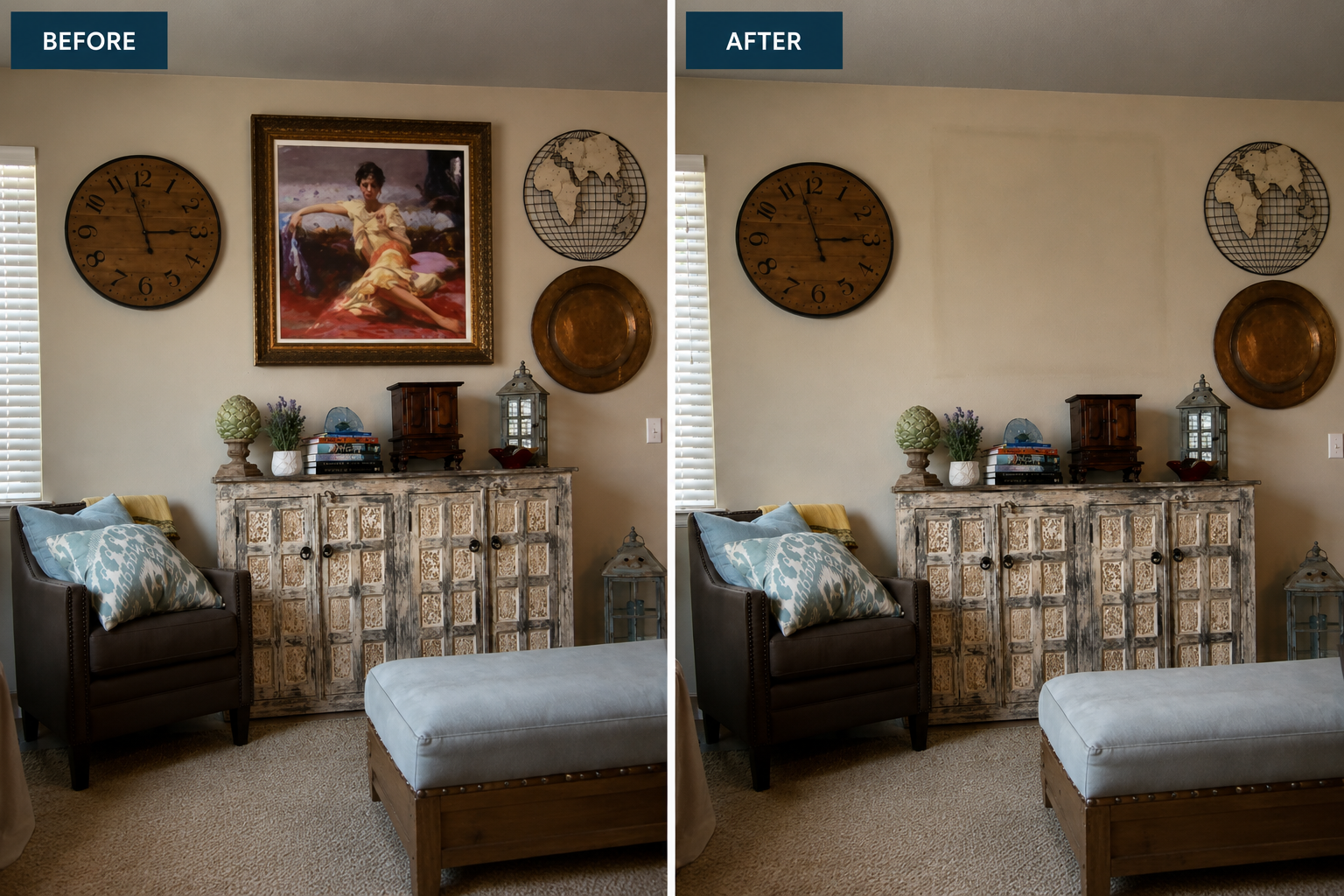
There's a painting hanging in our living room, a birthday gift from Jeff, the most elaborate gift he's ever given me. It's from an artist I love, one I'd been watching the market for over two years before this piece finally came up at an auction around 2020. I knew the second I saw it that it was the show piece our living room needed. I wanted to look at her every morning over coffee, and for years, I have.
Now, looking at our future selves, I know the truth: I love the feeling she gives me more than I love the object itself. That doesn't make it any easier to think about selling her. I haven't found what's going to replace that feeling yet, and I'm still working through it, back and forth, some days ready, some days not. I don't think that feeling is going to resolve quickly. Some things you don't let go of in one clean decision. You let go of them slowly, a little more each time you look at the empty spot where they used to be.
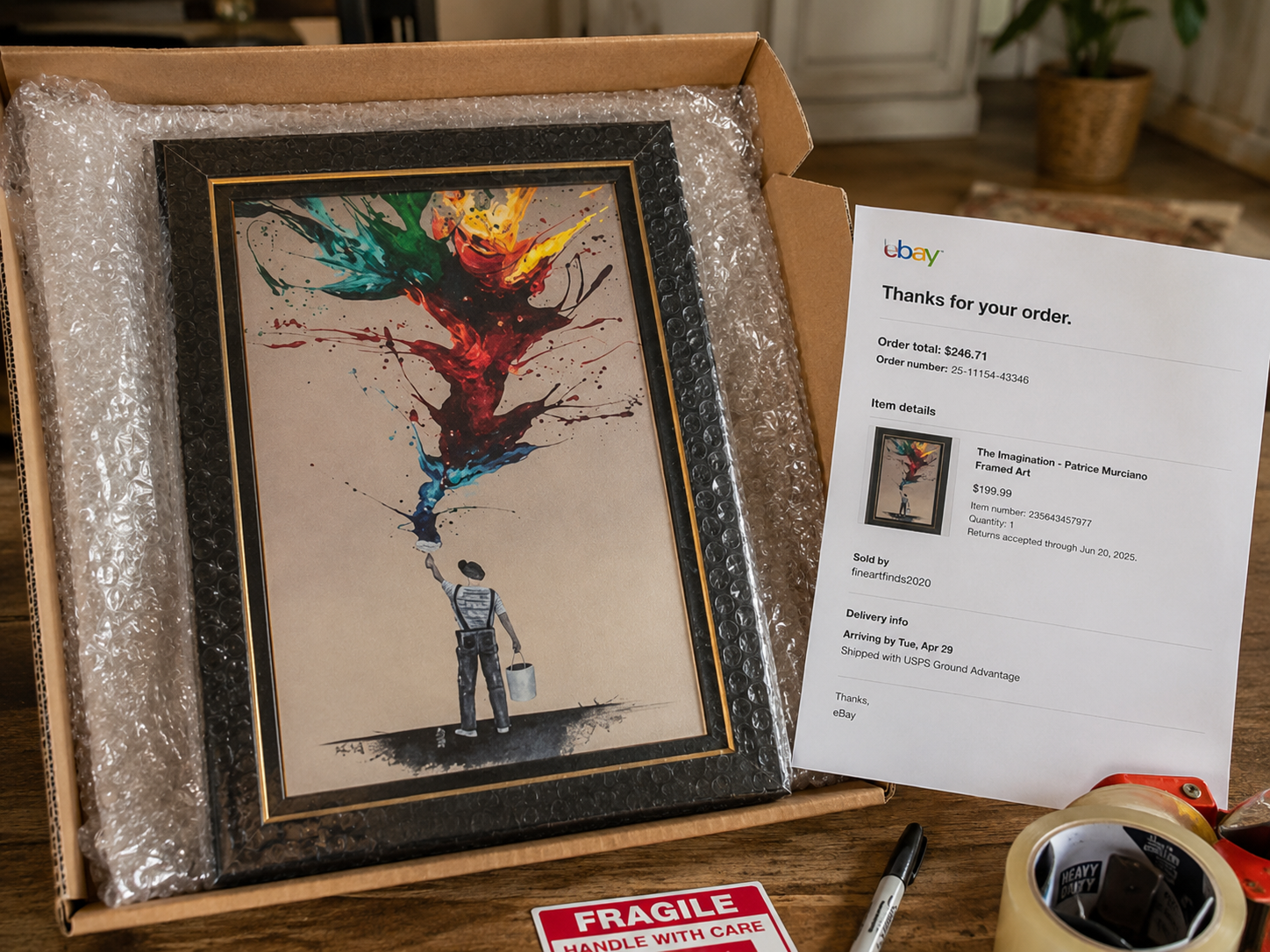
This one's different from the Michael Godard piece we already sold. That one, we'd already made peace with. This one, the money it eventually brings in will help fund one of our future trips, but right now it still just feels like losing her.
The rule we've landed on, the one that actually cuts through most of this, is simple: does it serve a purpose in the next several years before retirement, or does it serve a purpose once we're there. If it doesn't fit either category, it belongs to a previous life, and it's time to let it go.
We only want to go through that kind of letting go once. Every time we hold onto something out of guilt or grief over what it used to cost, or what it used to mean, we're just setting ourselves up to feel it all over again later. It stings sometimes, and for some things, like this painting, it's probably going to keep stinging for a while yet. But it only stings because you're living in the past, even a beautiful one, and we're trying very hard to live in what's next instead.
